- Home
- Departments
- Utilities
- Environmental Programs
- Industrial & Commercial Business
Industrial & Commercial Business
 Industrial and Commercial Businesses
To report pollution or water waste violations use Report It! or call Public Works 760-839-4668.
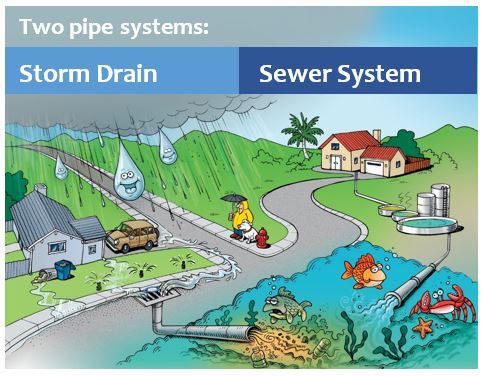
Industrial and commercial business have a responsibility to comply with state and federal regulations to prevent adverse environmental impacts as a result of business activities. Pollution prevention through the implementation of Best Management Practices (BMPs) eliminates harmful pollutants from entering local waterways untreated via the storm drain system.
Eliminating irrigation runoff protects waterways and helps your home or business save water and energy.
In compliance with State storm water regulations, the City's Environmental Programs Division maintains an inventory of commercial and industrial facilities, and inspects them annually to ensure that best management practices are being used effectively. The City provides efficient service by combining storm water inspections with Sewer Pretreatment inspections for Fats, Oils, and Grease (FOG). The City is also required to notify relevant businesses of any requirements relating to the Industrial General Permit (IGP), and to notify the regional Water Quality Control Board of any businesses suspected of not enrolling in the IGP.
Recycling and waste management programs are administered by the Recycling and Waste Reduction Division.
The City inspects agricultural properties and provides educational resources to producers on how to implement best management practices. For more information and resources, visit the Agricultural Resources Ad Hoc Subcommittee webpage.
Required Best Management Practices (BMPs)
Eliminate all illicit discharges to the storm drain system, including over-irrigation.
Good Housekeeping
- Maintain landscape and consider water wise landscaping.
- Keep outside areas swept clean. Keep absorbent material onsite and use promptly when a spill or leak occurs. Remember the spill is not removed until the absorbent has been swept up and disposed of appropriately.
- Use a mop and bucket only if necessary. Avoid power washing or hosing down hardscape; if needed, all wash water must be captured and properly disposed of.
- Wash water should be prevented from entering drainage structures and from entering the street.
- Ensure that waste lines are not connected to the storm drain system.
- Trash and materials for recycling should be stored under cover. Dumpster lids should be kept closed and trash and recycling areas should be free of debris. Immediately replace any damaged or leaking dumpsters. Empty dumpsters before they overfill.
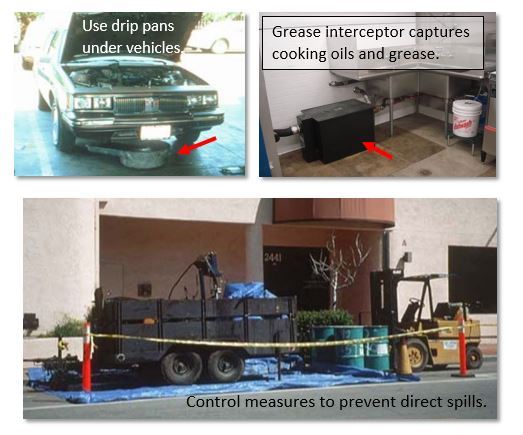
- Inspect and maintain grease traps, separators, sumps, and drainage structures so that they work effectively.
Materials Handling
- Store liquids (oils, paints etc.) under cover and provide secondary containment to capture potential spills.
- Store all materials and equipment under cover (or provide cover before rain).
- Ensure that containers of hazardous materials or wastes are properly labeled and stored in secondary containment under cover.
- Have materials available to immediately stop a discharge or absorb a spill when dispensing or loading/unloading materials.
 Equipment Maintenance
- Perform maintenance work indoors if possible.
- Promptly repair leaks and remove spills.
- Clean equipment in designated waste areas connected to sanitary sewer.
- Use drip pans under vehicles.
- Store vehicles indoors where possible.
Train all employees to follow these practices. Remind them that the storm drain system is SEPARATE from the sanitary sewer and that it discharges runoff to local water bodies untreated.
If your property has structural Best Management Practices, such as bioswales or inlet filters, annual certification of maintenance is required. For more information, visit Structural BMPs page.
Helpful Links
- Fats, Oil, and Grease (FOG) Program
- Trash Enclosure Guidelines (PDF)
- City of Escondido BMP Manual (PDF)
- Water Quality Brochures
- Industrial General Permit
- CASQA BMPs
- Hazardous Waste Facility (light waste loads)
- Water Conservation Rebates and Incentives for Businesses
- Escondido Municipal Code (See Chapter 22)
- Dental Amalgam Rule
- Wastewater Grease Control Permit - Food Service Establishment Fee/FOG
- Wastewater Discharge and Permitting Requirements of Breweries, Wineries, and Distilleries (PDF)
For further questions, please contact Environmental Programs at 760-839-6290
Industrial General Permit
The Statewide General Permit for Storm Water Discharges Associated with Industrial Activities (Order 2014-0057-DWQ (PDF)), known commonly as the Industrial General Permit, is issued by the State Water Resources Control Board (SWRCB). The permit went into effect July 1, 2015 and applies to a range of industries including manufacturing, recycling, transportation and landfill activities.
Resources are available to learn about the permit and steps you can take to ensure compliance. Industrial Stormwater Compliance Workshops are offered periodically by the University of California, San Diego.
Urban Runoff Pollutants of Concern
- Irrigation Runoff
- Pesticides
- Fertilizers
- Sediment
- Hazardous Materials and Chemicals
- Bacteria and Viruses
- Fats, Oils and Grease
- Trash and Debris
- Metals
- Detergents